 BeforeGo
Tokyo in 4 days: a first-trip itinerary
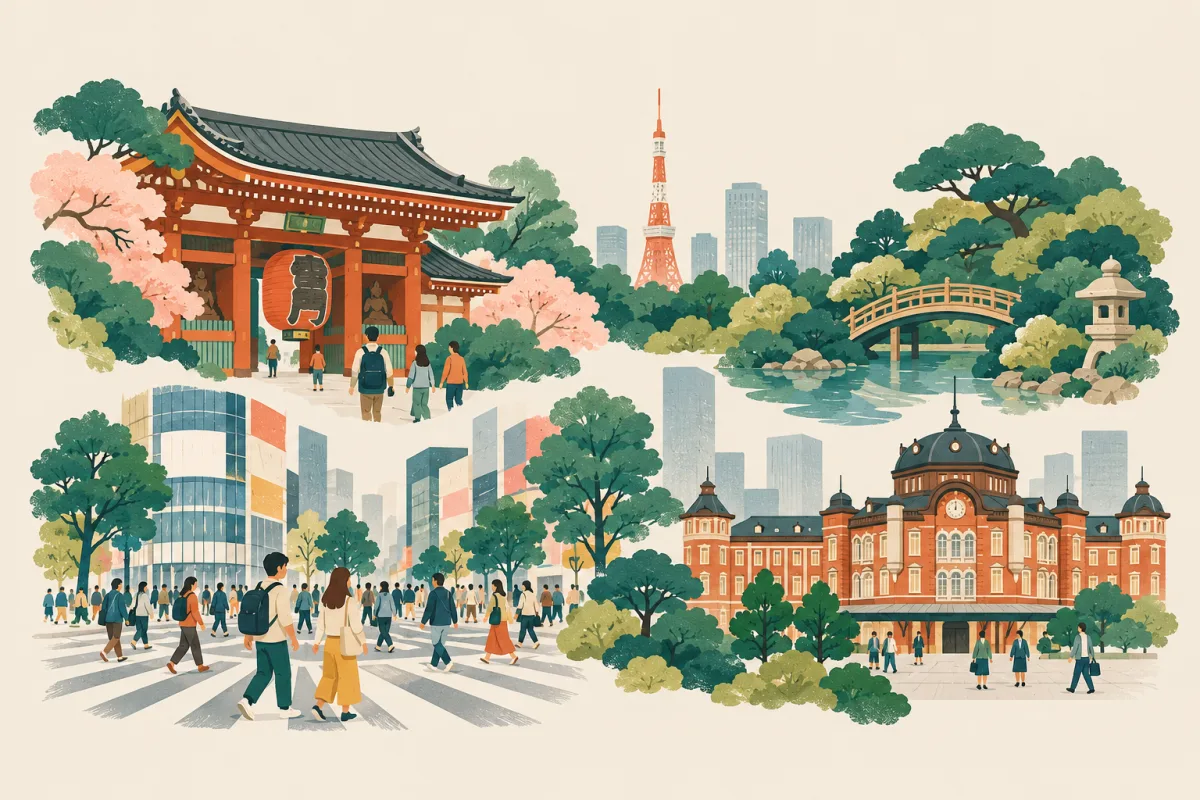
Spend four full days in Tokyo without crossing the city for every stop: Asakusa and Ueno in the east, Harajuku and Shibuya in the west, a slower Shinjuku day, then Tokyo Station and Ginza. Start with this route, change the parts that do not suit you, and keep your departure tasks beside the plan.
This is a self-guided starting point for a first visit, with walking and public transport. The four days exclude airport travel. If your stay includes an evening arrival or a morning departure, shorten the plan rather than treating either as a full sightseeing day.
Edit, copy or print the four-day plan · Prepare with the Japan travel checklist
Four days, grouped by area
- Day 01 · East Tokyo
Asakusa & Ueno
Senso-ji → Ueno Park → a museum or Ameyoko
See the day - Day 02 · West Tokyo
Harajuku & Shibuya
Meiji Jingu → Harajuku → Shibuya Crossing
See the day - Day 03 · A slower day
Shinjuku
A garden morning → a break → dinner in the city
See the day - Day 04 · Central Tokyo
Marunouchi & Ginza
Tokyo Station → Marunouchi → Ginza
See the day
Suggested order. Swap whole days around weather, closures and your fixed bookings.
Our time allowances below are suggestions for planning, including pauses; they are not measured journey times. Check your actual hotel-to-stop journeys and the opening calendar for each place before assigning dates.
Day 1: Asakusa, then one Ueno afternoon
Morning: allow roughly two to three hours for the approach through Kaminarimon and Nakamise to Senso-ji, the temple grounds, and a nearby meal or break. Start with the temple area; shops have their own opening times. The official Asakusa guide explains the neighborhood and its riverside setting.
Afternoon: travel to Ueno and choose a museum visit or a park-and-Ameyoko walk. A museum can easily become the main event of the afternoon; allow around two to three hours if that is your priority. Skip the extra shopping walk when it would turn a pleasant day into a checklist.
Tokyo Metro's official line and station information shows Asakusa and Ueno on the Ginza Line. Check the station exit as well as the train journey: arriving at Ueno Station is not the same as arriving at a museum entrance.
Before you set the date: the Tokyo National Museum visitor page lists Monday closures, holiday exceptions and temporary room closures. Pick the exhibition you want to see and check its own admission details. For a lighter first day, leave Ueno for another visit and stay around Asakusa.
Day 2: Meiji Jingu, Harajuku and Shibuya
Morning: begin with Meiji Jingu, then choose a Harajuku shopping street or a walk toward Omotesando. Give the shrine and its approach room in the morning instead of scheduling it as a ten-minute stop. Use Meiji Jingu's official visitor information for access and visiting guidance.
Afternoon: continue toward Shibuya for browsing, the crossing and dinner. GO TOKYO places the Harajuku and Shibuya areas within walking reach, but a direct walk and a shopping afternoon are different things. Leave a generous gap for stops, or take transport when that suits your energy and mobility.
Choose your anchor: if you add a ticketed observation deck, a reserved meal or an exhibition, put that confirmed time into the plan first. Reduce shopping around it. This route does not require buying a viewpoint ticket, and it does not assume walk-in availability.
In rain: shorten the outdoor sections and keep the afternoon around one shopping area. A day of indoor browsing is still a full day; there is no need to add another district to compensate.
Day 3: a slower Shinjuku day
Morning: plan around one and a half to two hours in Shinjuku Gyoen if its calendar fits your dates. Keep the rest of the morning open for the journey and lunch. Check the garden's official admission information: closing times vary by season, Monday closures have exceptions, and busy blossom dates may have special admission arrangements.
Afternoon: take a break, choose a small amount of shopping, or return to the hotel before dinner in Shinjuku. Use this as the recovery day in a first visit. Moving through a large station, finding the right exit and deciding where to eat all take time even when there are few attractions on the list.
If the garden is closed or the weather is poor: swap this whole day with the Tokyo Station and Ginza day. If the garden cannot fit your stay, make it optional and keep the Shinjuku day focused on indoor browsing and food. Do not move a dated ticket or restaurant booking without checking whether it can change.
Day 4: Marunouchi and Ginza, with room to finish
Morning: see Tokyo Station's red-brick Marunouchi exterior, then walk the surrounding streets with a café break. The official Tokyo Station and Marunouchi guide helps distinguish the station's two sides and nearby shopping areas. This plan stays outside the Imperial Palace; it does not include a palace tour or assume access to its gardens.
Afternoon: head toward Ginza for a few chosen shops, a gallery if one interests you, and a final meal. The official Ginza guide covers its station connections and the walk from Tokyo Station. Choose a short train journey if you would rather save your walking for the district.
Keep the ending loose: leave time to pack or revisit something nearby. If this is actually your flight day, replace the sightseeing block with your checked airport journey and the time your airline requires. Four full days and a four-calendar-day stay are different plans.
Adjust it for your trip
- Only three full days? remove the Shinjuku day and use the other three as a starting point. Keep a rest break in each; do not move every dropped stop into another afternoon.
- Traveling with children or someone who prefers less walking? choose one main stop per half-day, check lifts and station exits, and keep a nearby meal and a rest stop in each area.
- A theme park or a day trip is essential? replace a whole city day. This plan has not allowed time for Disney, Mount Fuji or an out-of-town excursion.
- Already have bookings? place their dates and addresses first, then rearrange the area days around them. Leave space between the end of one booking and the next journey.
For a hotel, compare the actual walk from the nearest station exit and your airport connection before choosing by neighborhood name. Use the trip-planning guide to turn your own saved places into a realistic daily structure.
Make the four-day plan yours
Change the dates, remove a stop or add your own booking times below. Then copy the text into your notes or paste it into BeforeGo to organize it. Check the imported places and days before keeping the result; BeforeGo's AI imports use cloud processing.
Edits stay on this page until you leave. Copy or print your plan before closing or refreshing. Your text is not uploaded by this editor.
Suggested route, not a booking. Check official opening calendars and transport for your dates.
Route and official references checked October 28, 2026.
Guide and official sources: https://beforegotech.com/guides/tokyo-4-day-itinerary/
Departure checklist: https://beforegotech.com/tools/japan-travel-checklist/
Put preparation beside the itinerary
Use the Japan travel checklist for documents, connectivity, packing and tasks before departure. It is written for US departures, with nationality-specific visa guidance limited to US passport holders; check the official requirements that apply to your own passport and route.
Keep your dates and saved bookings with the plan in BeforeGo, and use its destination-based packing list and departure reminders. Copying from this page does not automatically sync it to the app or confirm a reservation. Traveling with friends? Keep shared payments clear with the trip expense splitter.
Official sources and last check
We checked the linked official sources on October 28, 2026. The day order, time allowances and alternatives are our editorial suggestions. Openings, individual exhibitions, reservations and transport can change; use the operator's page for your actual travel dates.
- GO TOKYO: Asakusa and Ueno.
- GO TOKYO: Harajuku and Meiji Jingu.
- Shinjuku Gyoen admission information (Japanese) and English visitor site.
- Tokyo National Museum: hours, admission and closures.
- GO TOKYO: Tokyo Station and Marunouchi and Ginza.
- Tokyo Metro: routes and station information.
Questions before you go
Are four days enough for a first Tokyo trip?
Four full days allow a first route through several Tokyo areas with room for meals and breaks. This itinerary excludes airport travel, theme parks and out-of-town day trips. Shorten it if your four calendar days include arrival or departure.
Can I change the order of the Tokyo itinerary?
Yes. Move whole area days around the weather, opening calendars and confirmed bookings. Check museum and garden closures before assigning dates, and do not move a dated reservation without checking its terms.
Can I edit and save this Tokyo plan?
Edit the plan text on this page, then copy it or use Print / Save as PDF. Edits are not saved after you leave or refresh, and this editor does not upload your text or automatically sync it to BeforeGo.
Can I put this itinerary into BeforeGo?
Copy the plan text and paste it into BeforeGo to organize the places and days. Review the imported result before keeping it. AI imports use cloud processing; copying from this website alone does not create an app itinerary or confirm bookings.